
Shailee Mehta | Into the Low Tide
20 March - 25 April 2026
“A different kind of hydrological cycle—an embodied one—insists that we relinquish any illusion that culture is separate from nature.”
—Astrida Neimanis
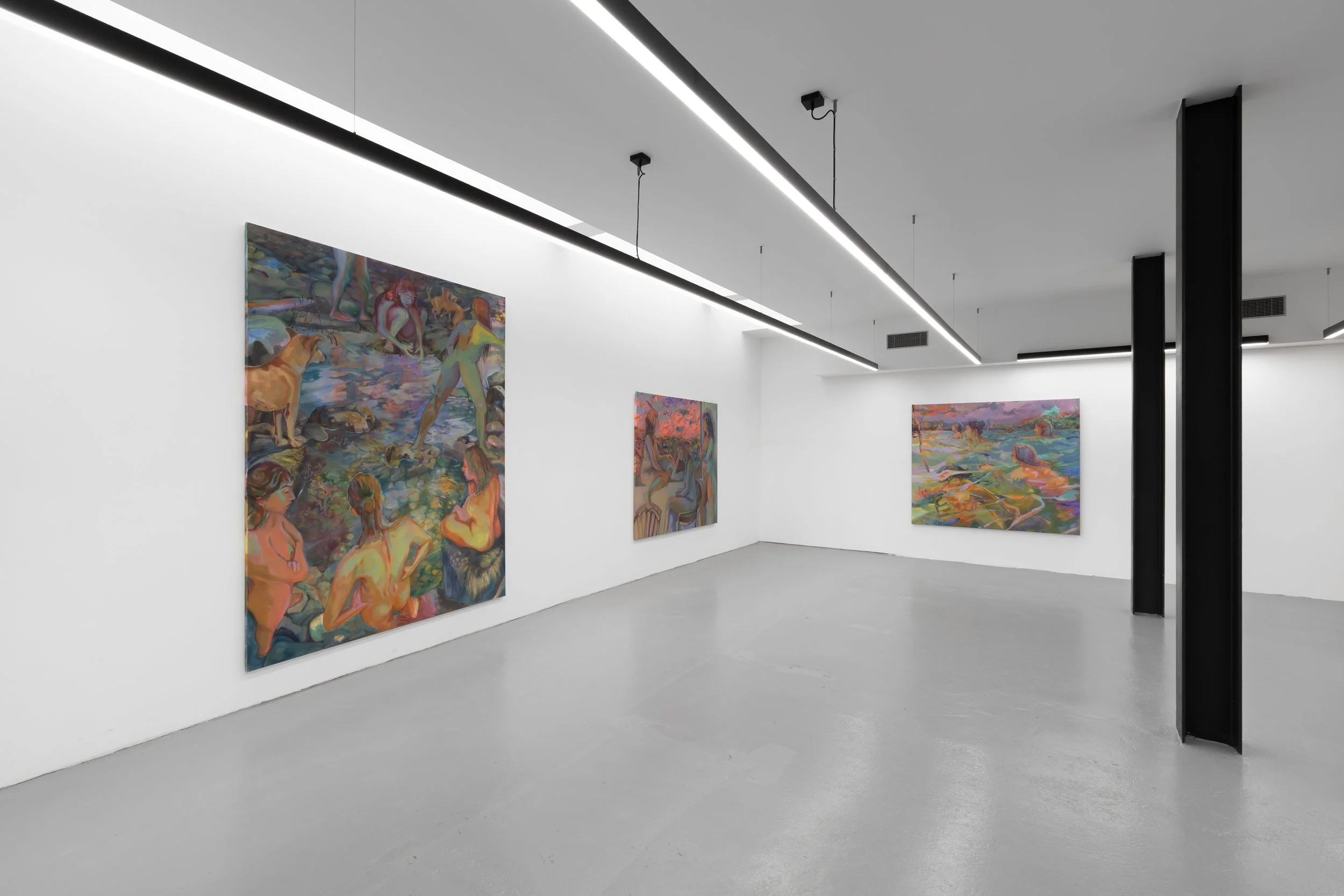
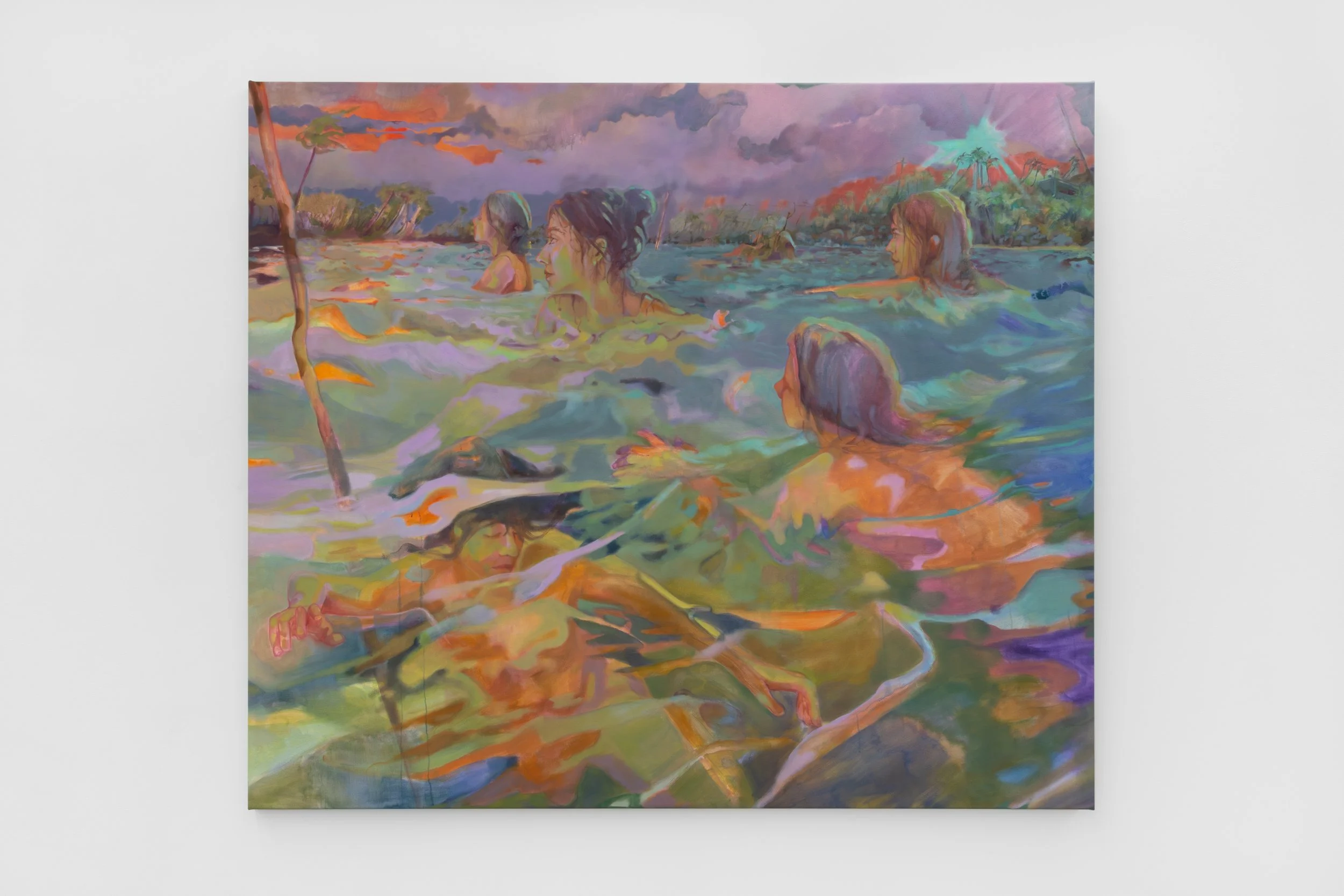
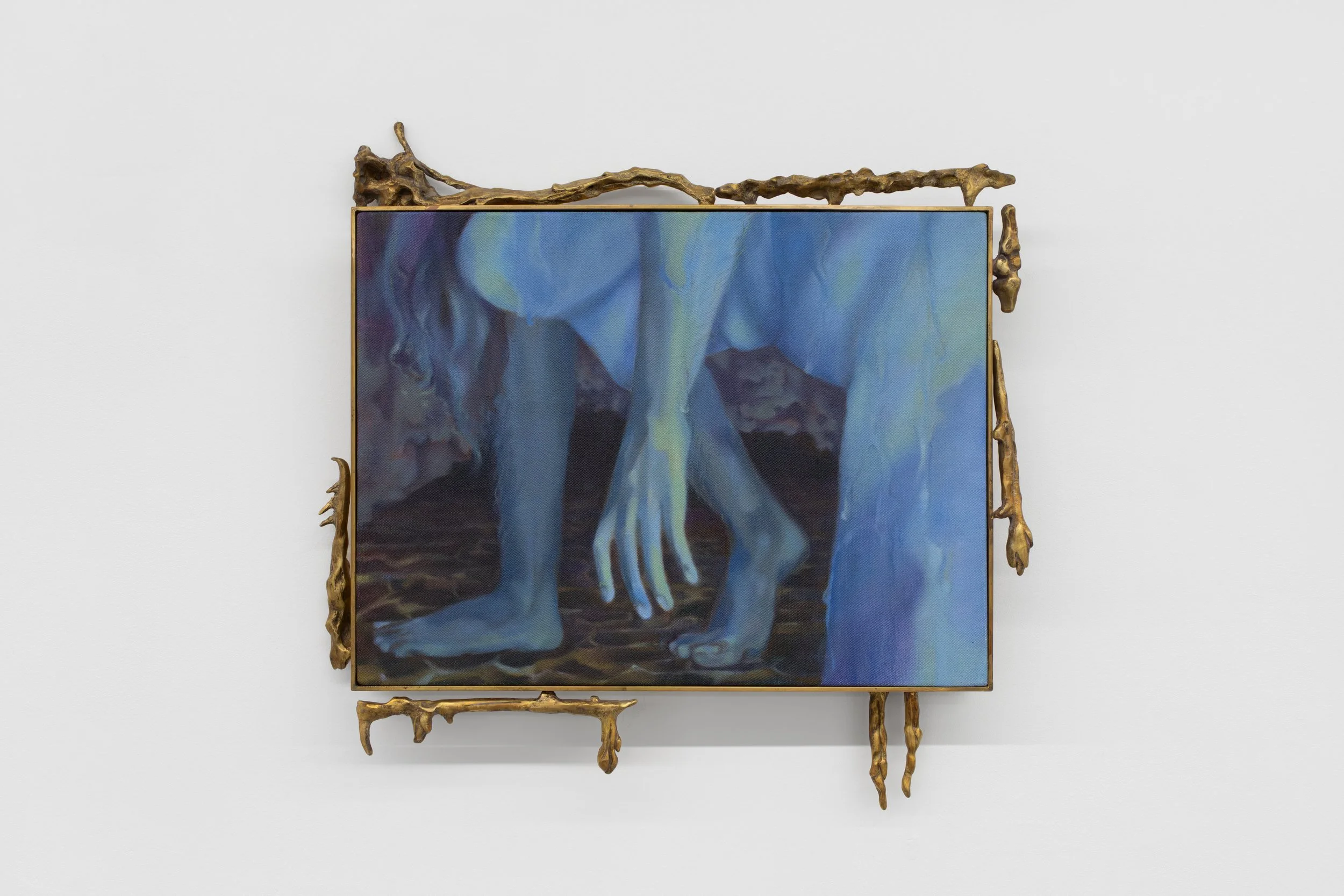
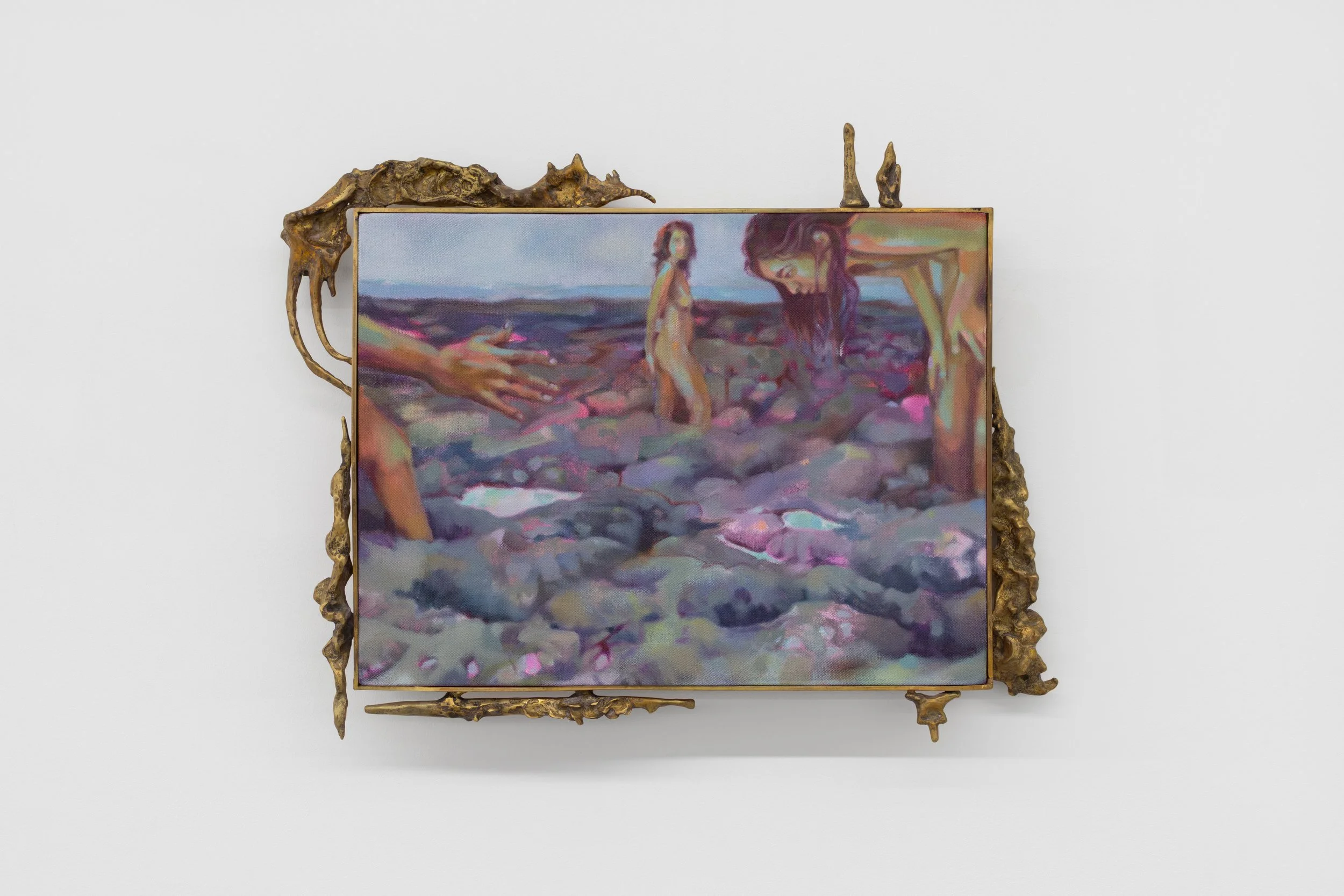
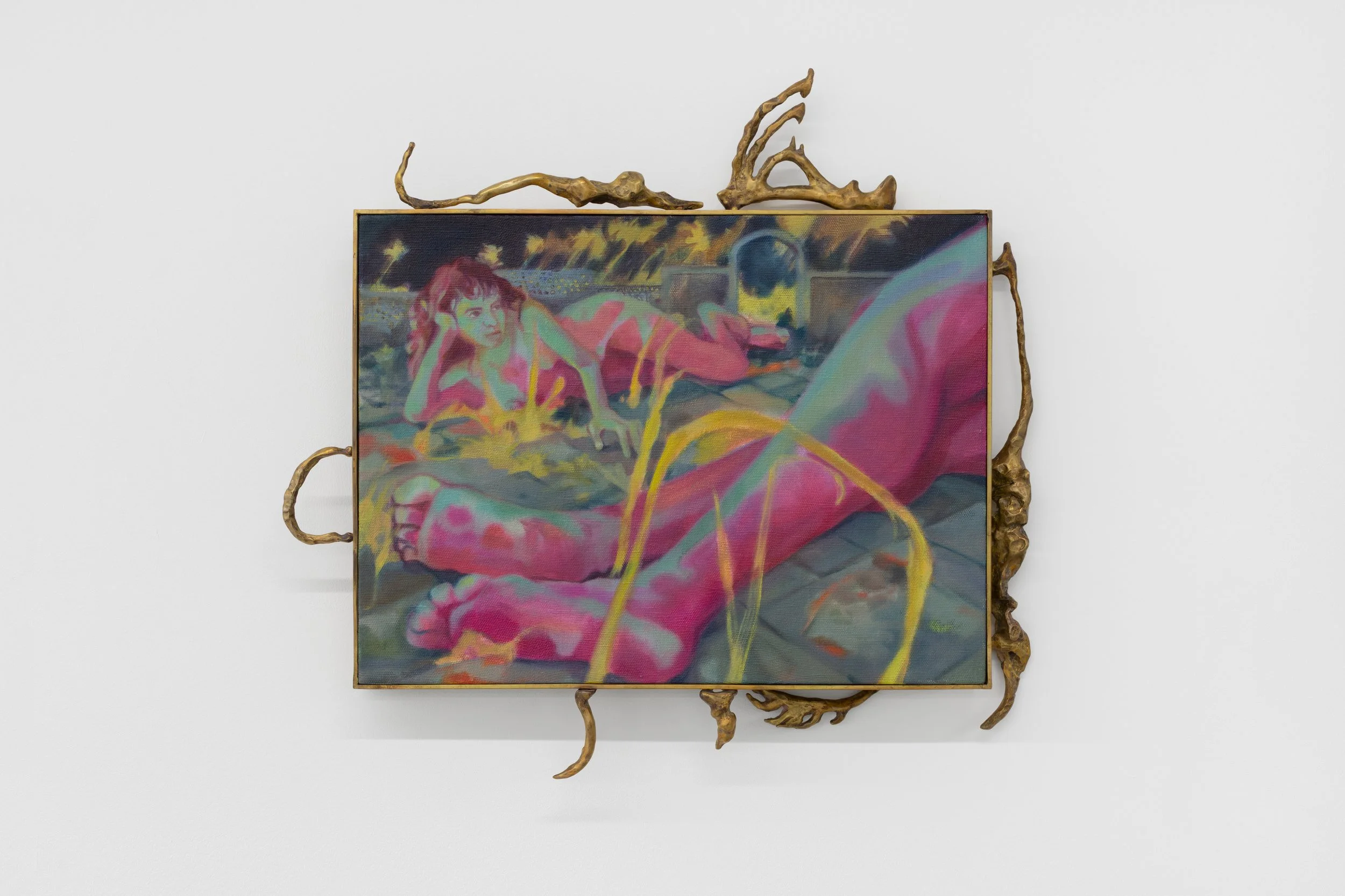
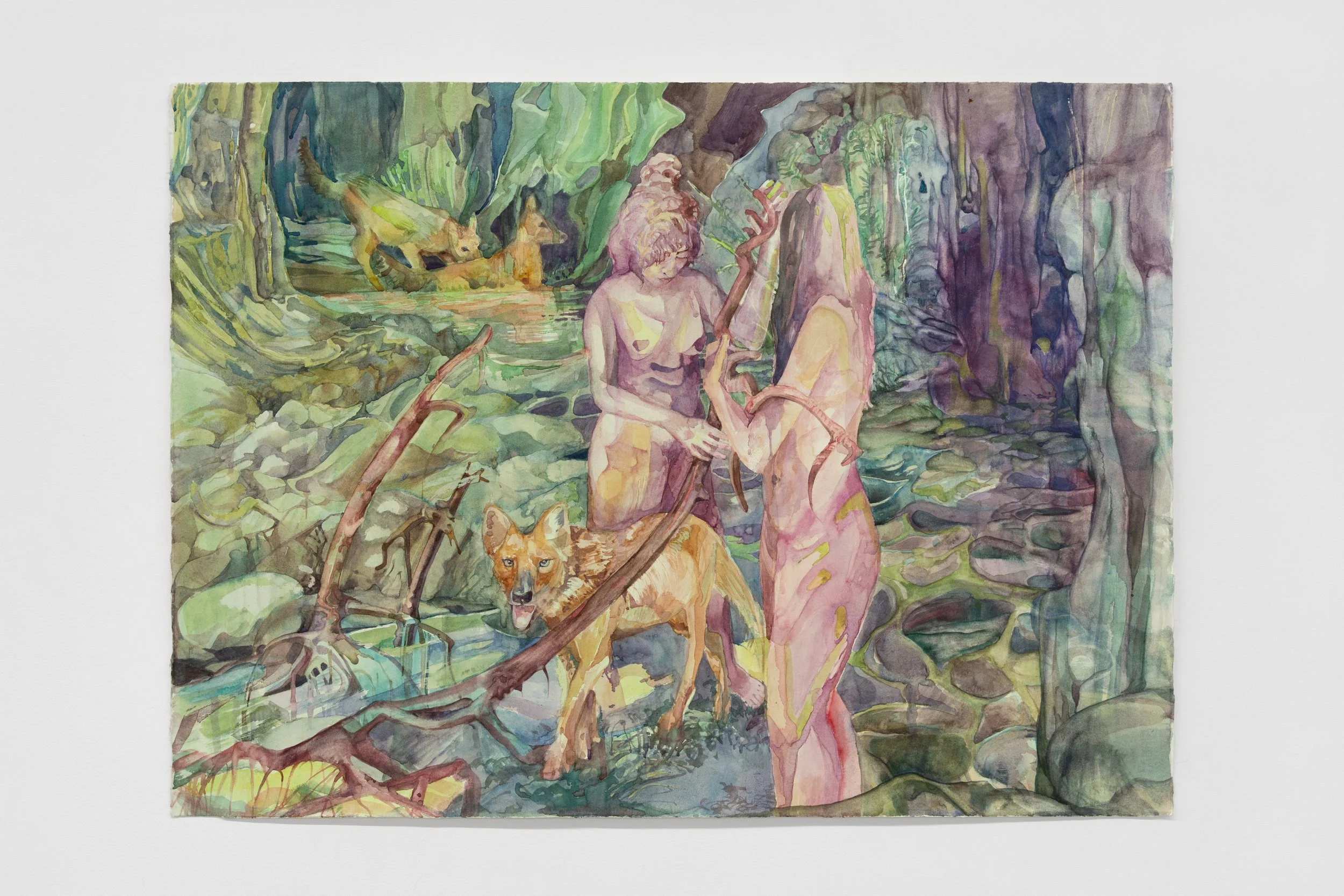
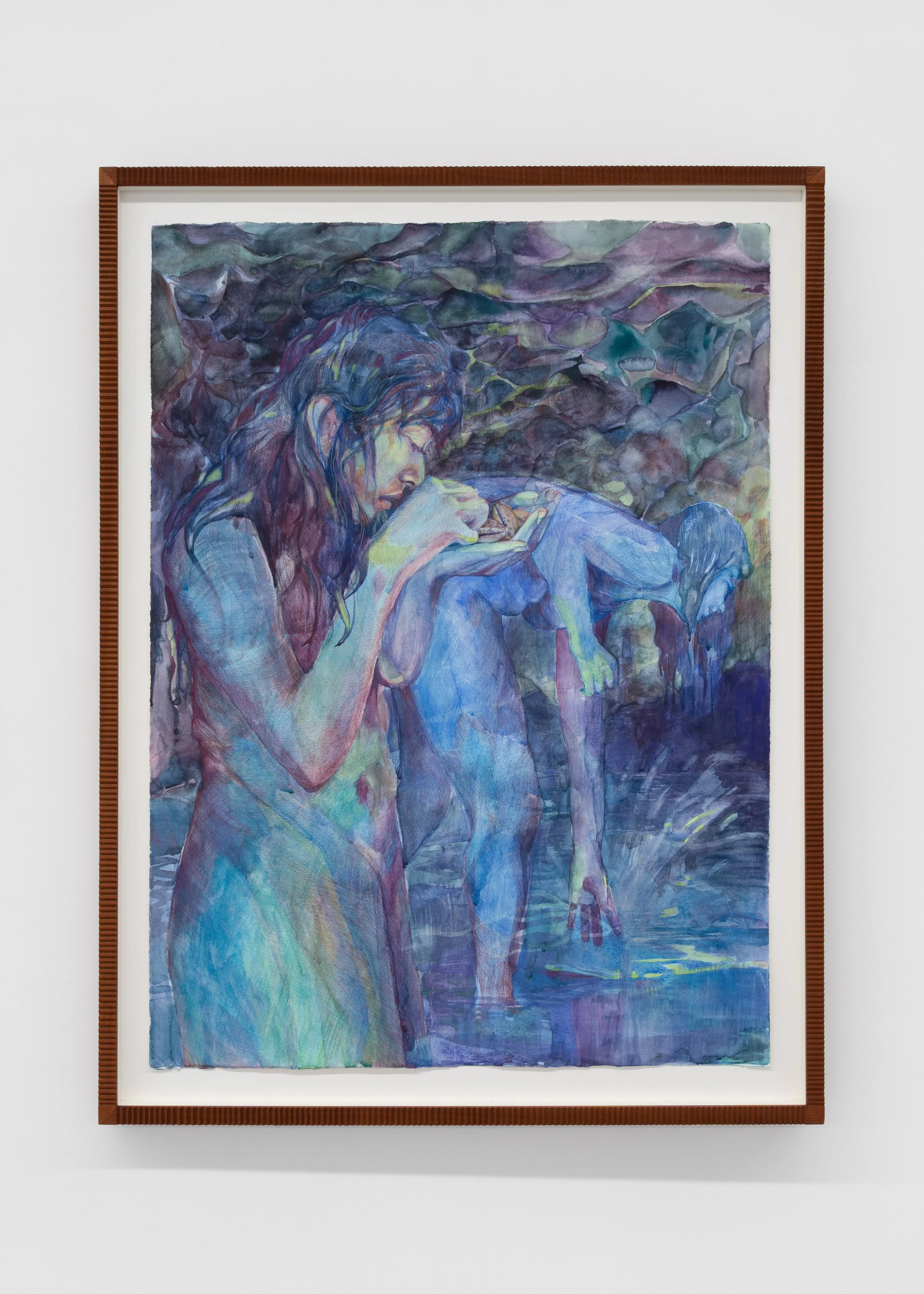
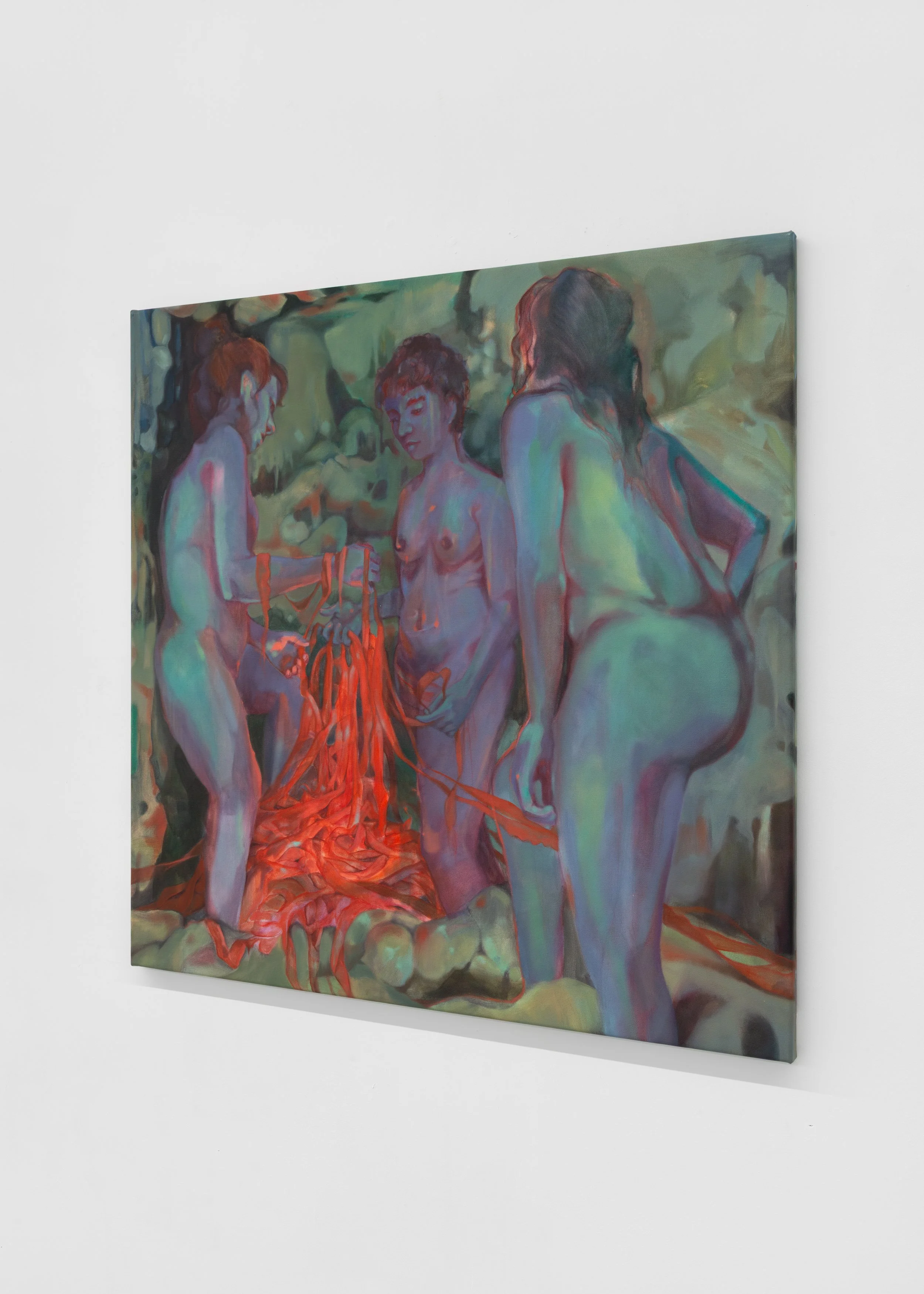
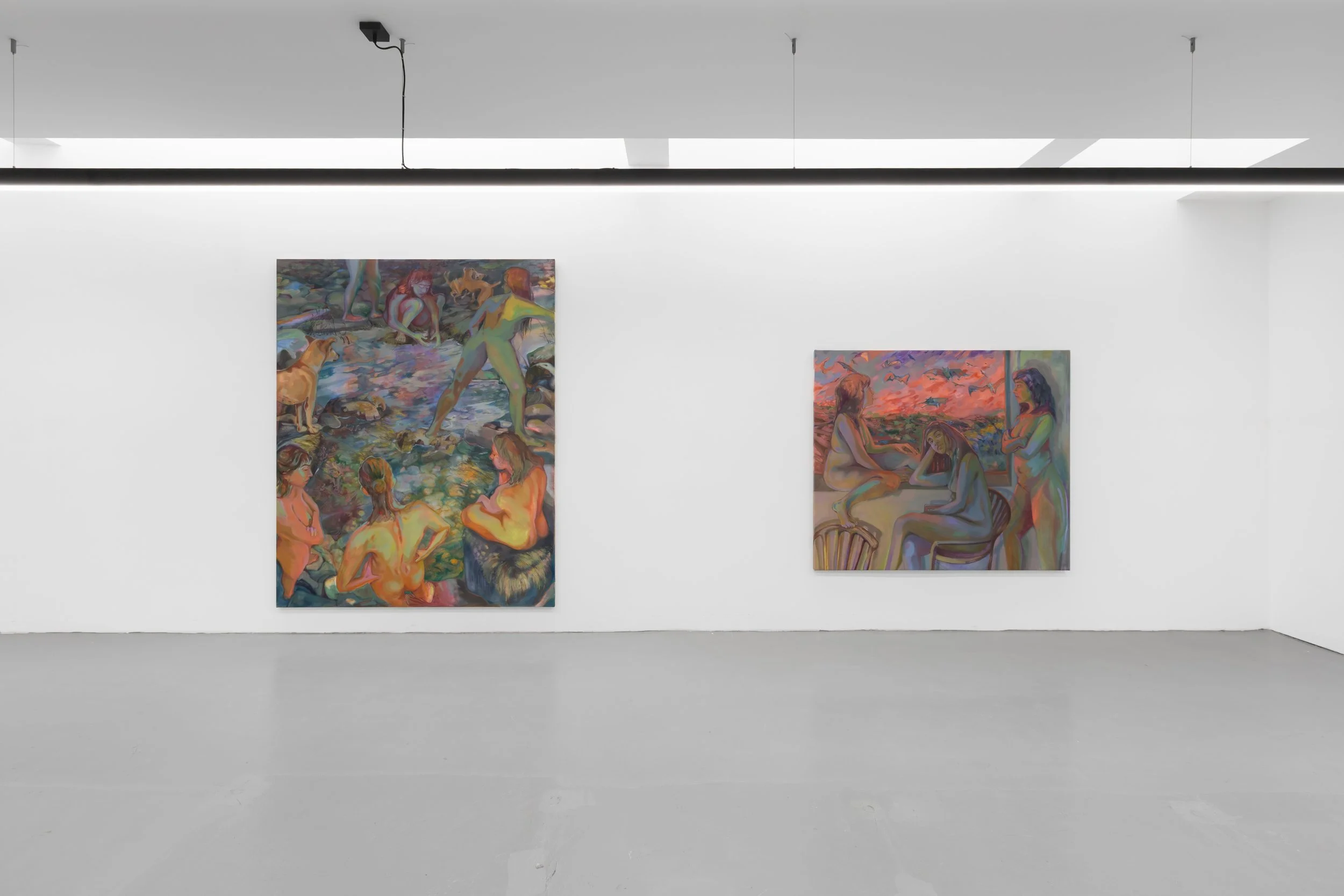
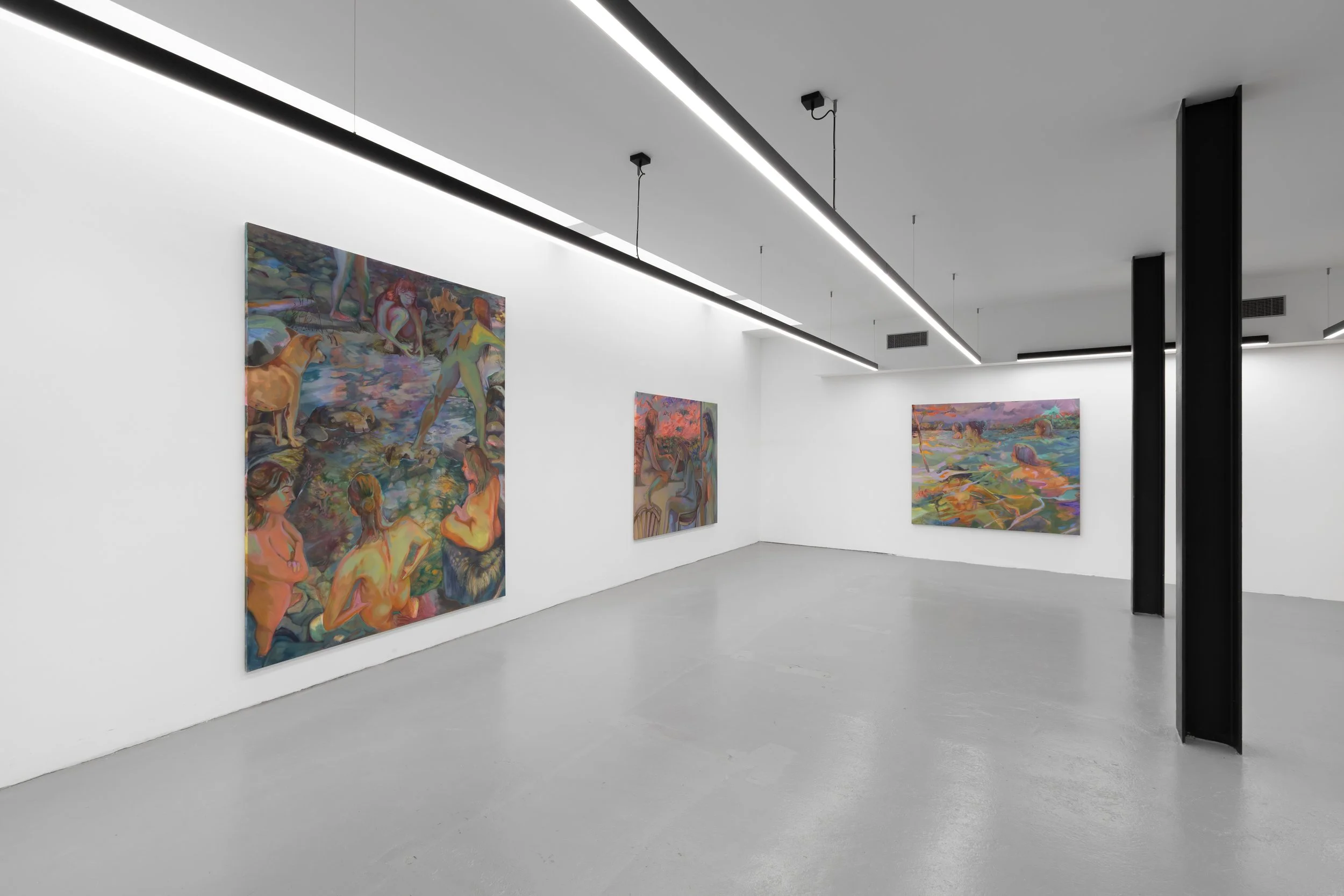
Water moves through these works as a living force - gestating, dissolving, and reflecting. Figures drift between submerged spaces, cavernous landscapes, and tidal thresholds where bodies and ecologies become indistinguishable. Developed through encounters with aquatic landscapes across geographies - a walk through the intertidal zone in Mumbai, limestone caves in Vietnam, and a residency along the southern coast of Italy, this body of work extends the artist’s ongoing inquiry into the parallels between water ecologies and the female body. The works made in Basilicata draw particularly from the history of grottoes in Italy, geological spaces historically associated with the aesthetic origins of the grotesque, approached here through the lens of Astrida Neimanis’s concept of an embodied hydrological cycle.
Ecological forms recur throughout the paintings as both motif and metaphor. The red mangrove, an ecosystem deeply affected by deforestation in India, appears repeatedly, its tangled root systems suggesting networks of interdependence and regeneration. With its striking red bark and reproductive resilience, the mangrove becomes an index for corporeality and gestation within the artist’s visual language.
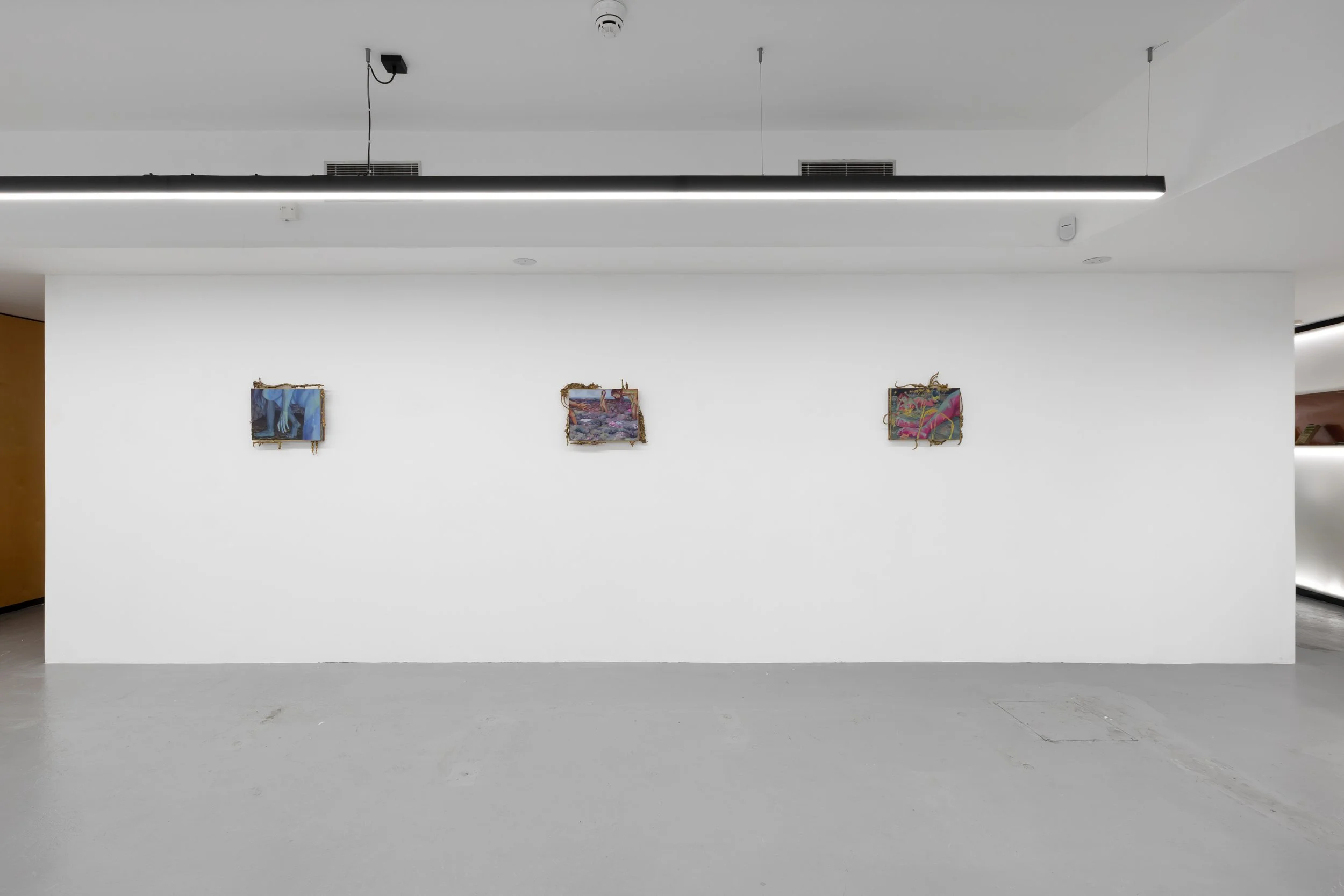
Across the works, landscapes assume generative capacities. Cavernous interiors become sites of emergence, where mythologised organisms such as bioluminescent seaweed clustered within caves, appear to grow and gather. This speculative ecology extends into the sculptural brass frames, produced through the traditional Dhokra lost-wax casting technique. Their forms evoke fossils, bones, and skeletal fragments belonging to imagined marine species, situating the paintings within a broader material ecology of relics and remains.
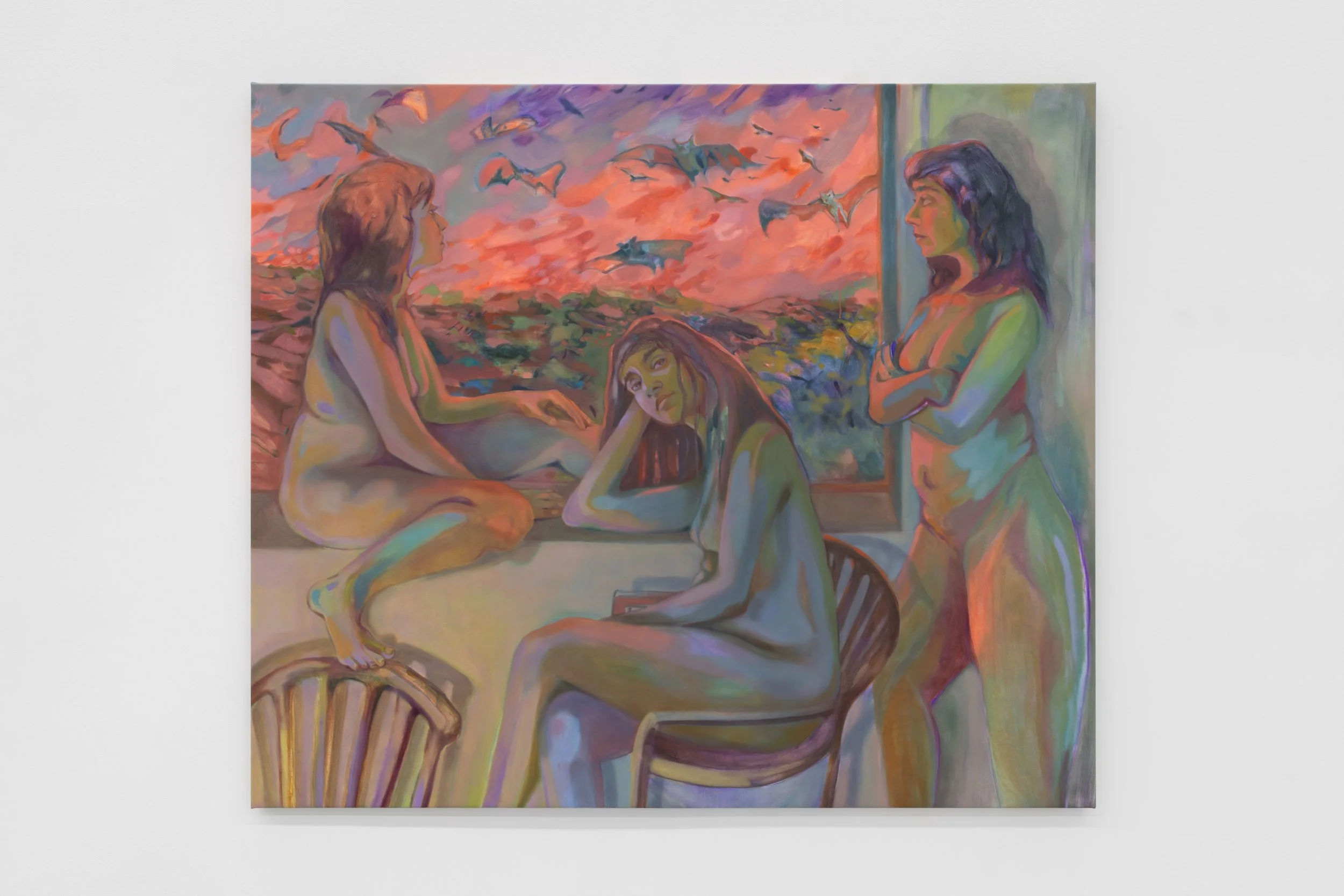
Such environments offer a potent metaphor for the female body as a site that both becomes and facilitates becoming. Echoing Neimanis’s writing on watery embodiment, the works foreground the permeability between bodies and environments, reminding us that human life is inseparable from the ecologies it inhabits. The hydrological cycle thus emerges not only as a planetary process but as a shared condition: we are, fundamentally, signatures of water.
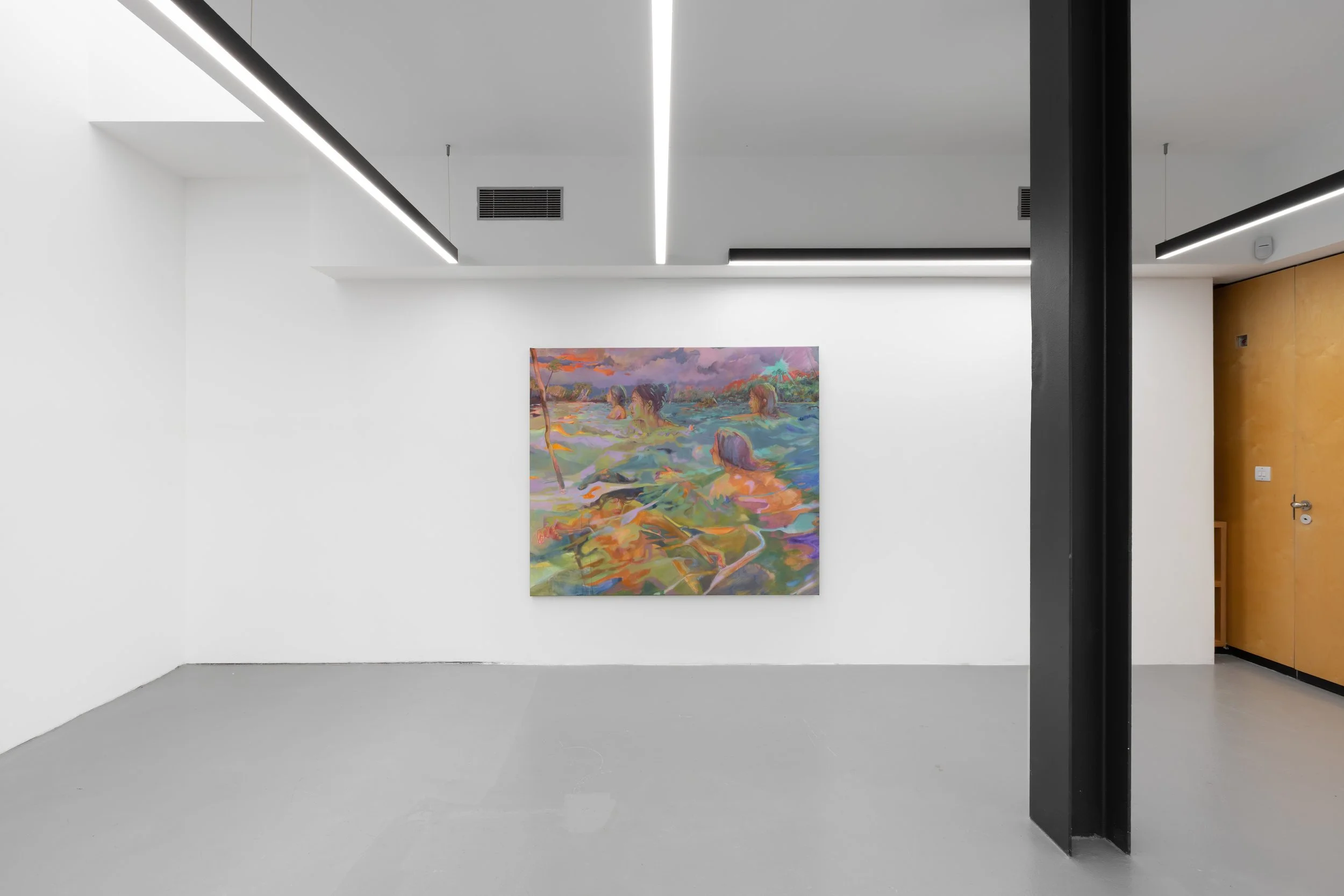
Water also shapes the paintings formally and perceptually. Submerged figures drift within aqueous abstraction, while shifting surfaces bend and refract light. In several works, mirrored or doubled figures appear—bodies in tandem, resting or moving together, recalling the reflective poetics of water itself. For Shailee, the act of painting water becomes a process of relinquishing fixed representation. From luminous watercolour washes to vibrant underpainted canvases, the works embrace fluidity and indeterminacy. Figures emerge as porous, osmotic forms, their edges dissolving into the landscapes they inhabit.
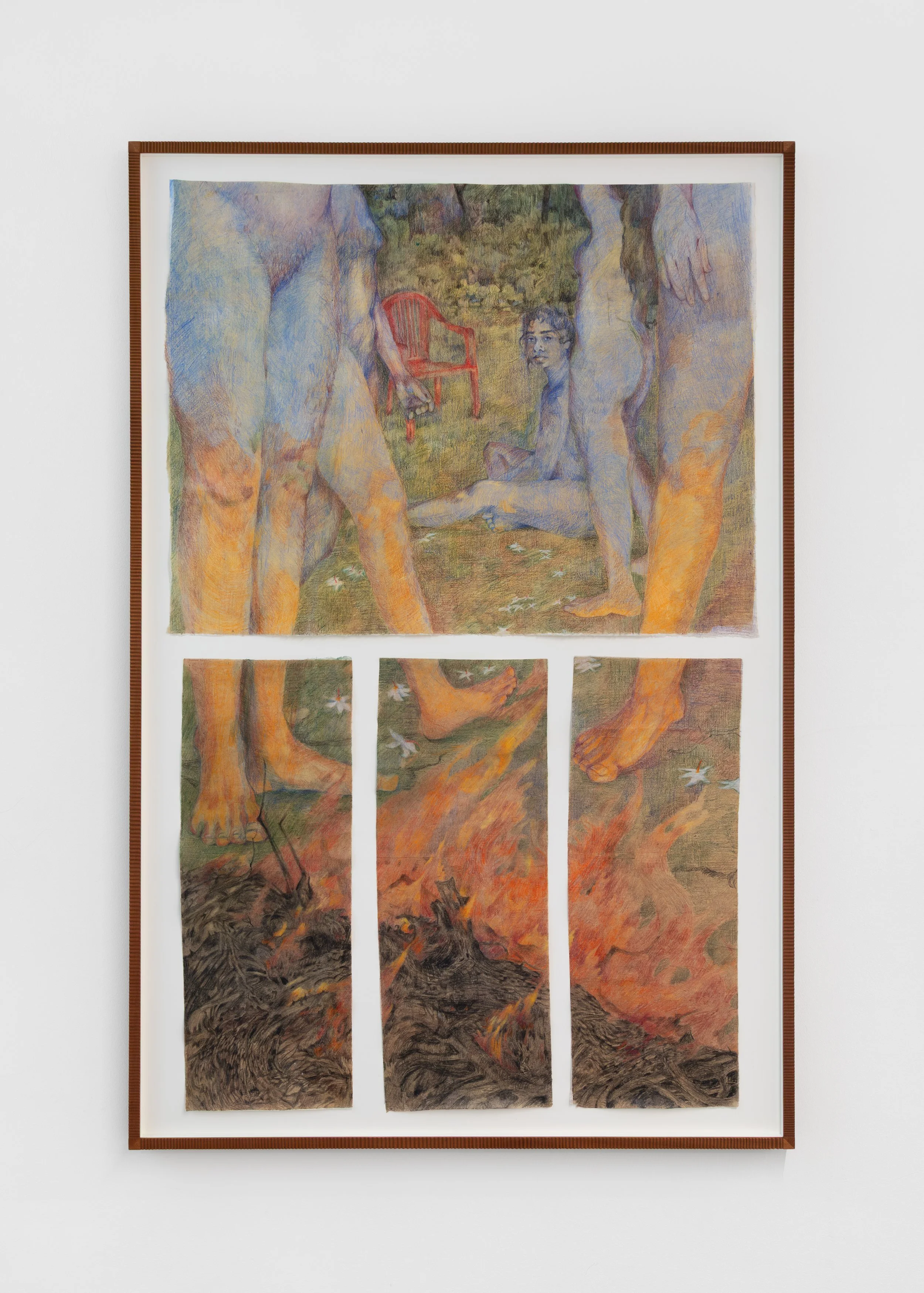
Subtle traces of contemporary ecological tension surface throughout: vertical markers of human intervention - rotting piers encrusted with barnacles or distant electric towers, interrupt the horizontal expanses of land and water, suggesting the uneasy coexistence of infrastructure and fragile ecosystems. A polyptych of drawings on layered rice paper introduces a tactile, ritualistic dimension to the exhibition. Referencing lunar cycles observed in India and across many cultures, these works gesture toward the longstanding relationship between celestial rhythms and planetary waters. Such alignments reinforce the exhibition’s central proposition: that nature and culture are not oppositional domains but overlapping strata within a shared palimpsest.
Ultimately, the works propose a recalibration of our relationship to the environment - one that moves from observation toward immersion. Returning to the shifting threshold between land and water, they invite us to step into the mutable terrain of low tide.
Shailee Mehta (b. 1998, India) lives and works between Goa, India and Oxford, UK. She will receive her MFA from the Ruskin School of Art, Oxford in 2027 and received her BFA from the Slade School of Fine Art in 2020. Selected exhibitions include Chants from the Hollow, Chemould Colab, Mumbai, 2025, Residency exhibition, Castello San Basilio, Italy, 2025, Continuum (after Jitish Kallat), Chemould Prescott Road, Mumbai, 2023 and Mudbath at Indigo+Madder, 2023
SELECTED WORKS
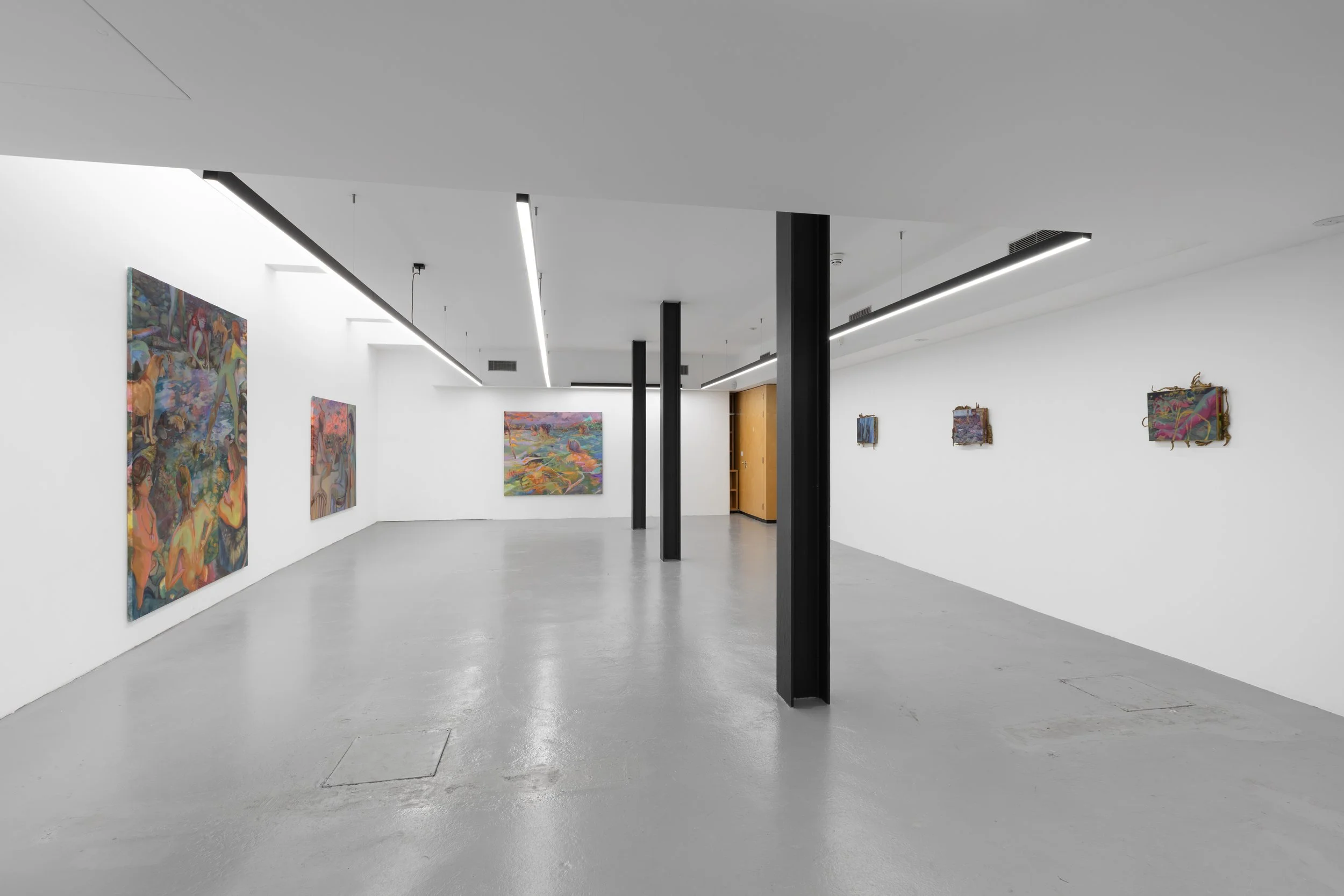
INSTALLATION VIEWS
To request a catalogue or receive further information, please get in touch: info@indigoplusmadder.com
Edge effect, 2026
Oil on canvas
228 x 178 cm